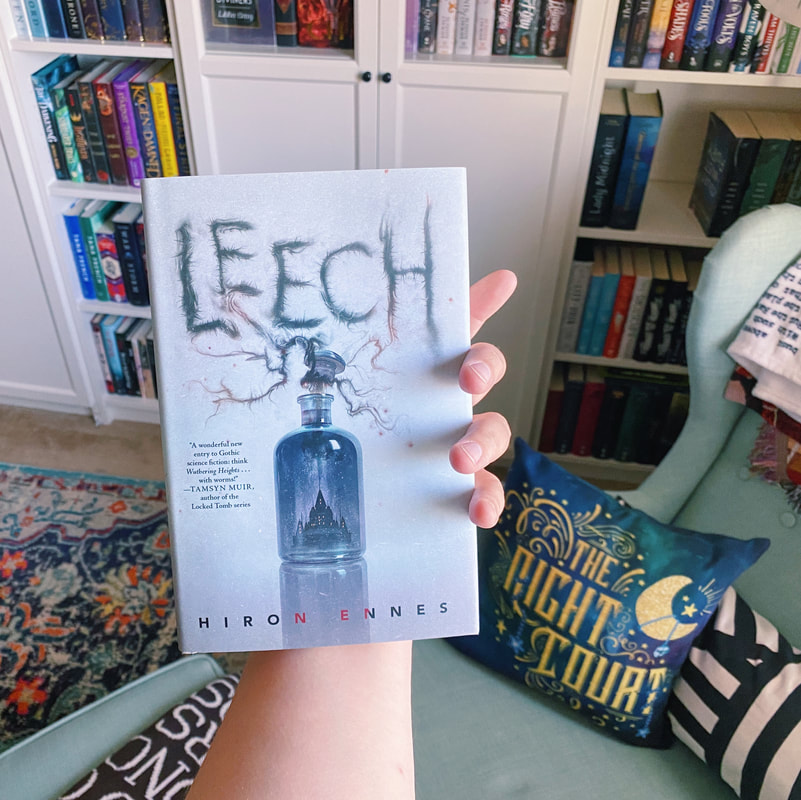
 3.5 stars
I have never read a novel like this before. I have…feelings about it. Can you be repulsed and engrossed at the same time?? Concept: ★★★★★ Body horror: ★★★★★ My enjoyment: ★ I love body horror books. Or at least, I used to say that. I think Leech broke my brain and has redefined the threshold on which we determine "body horror" in the realm of medical trauma, consent, and what it means to be a person in, essentially, meat suits. If the phrase "meat suits" makes you uncomfortable, please take that as your cue to stop reading this review here—and to avoid this book. Leech is very hard to describe. I commend whoever was tasked with writing the blurb for the inside jacket... it couldn't have been easy. How does one describe a novel like this? Every monster is the hero of its own story... that could be said about this book. When our society collapses in on itself and future versions of humanity exist in a very bleak, grim, and macabre future... that could be said about this book. Let's combine the idea of parasites with a gothic, moldering castle and make it mentally insane... that could be said too. Leech has a LOT going on in its pages. It's dense by every meaning of the word-- paragraph-wise, character-wise, worldbuilding-wise, and horror-wise. It is a LOT. And it makes no apologies for being that way. (It doesn't have to apologize, but it could have done with a stronger warning label! Lol.) To say "I enjoyed this reading experience" would be a lie. I did not have a good time. I loved the first bit of the book a lot—it's confusing, but intriguing and interesting at the same time. I thought the middle was a very dense attempt at trying to figure out the setting, worldbuilding, and sense of pacing. It took me ages to get through the middle sections because it was terribly easy to put the book down and simultaneously very hard to reengage with it when I tried to pick it back up. The ending... was both absolutely horrifying to my personal reading tastes and also a wild trip into the ether in terms of character arc upheaval. If you've made it this far into my review, you might be wondering why I'm giving this novel a generous 4 stars despite being viscerally upset by its contents. I, too, am a bit confused by myself. But at the end of the day, I think the author deserves some very high praise for instilling such a unique concept into such a horrifying package that dealt with literally every single variant of medical body trauma that could possibly exist in our human minds. All of it. It's all here in this book. If, for some reason, you're not yet turned off from this book by my review, then I do recommend it. Hiron Ennes is an author to watch—they are doing very unique things in the horror space. Thank you to TOR for my copy in exchange for an honest review.
0 Comments
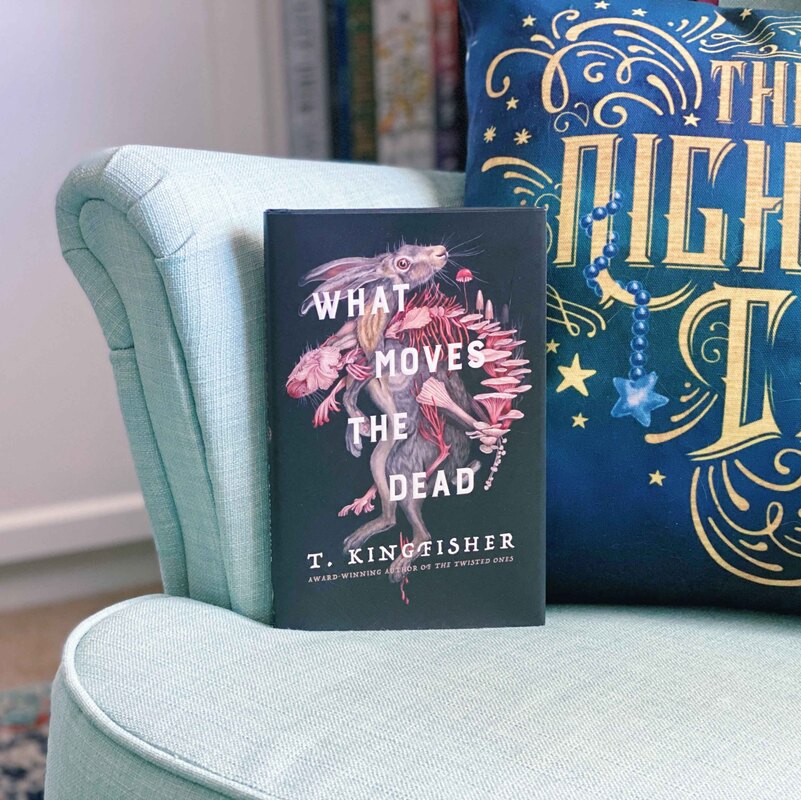 5 stars
Oh YES. I had such a horrifically good time. This is the mirror-twin counter melody to Mexican Gothic, the Fall of the House of Usher done grotesque. Concept: ★★★★ Pacing: ★★★★★ Enjoyment: ★★★★★ Well, it's happened again: I have fallen in love with yet another bizarre and lingering horror story with a special focus on mushrooms. ("Again," yes, because this niche apparently has multiple books in it.) Join me and the spores... Alex Easton has heard word that their childhood friends, the Ushers, are struggling. Madeline is gravely ill, Roderick is not faring much better, and something is amiss. Alex arrives, and they quickly realize that Roderick's understated things. There is something very, very wrong with this scene. Madeline looks like she's already dead, Roderick doesn't look much better. The Usher estate is damp, moldy, and near-death itself. There's a visiting American doctor who has no idea what is going on, and a wandering older British woman on the grounds with a passion for mushroom study and a daughter named Beatrix Potter. As Alex stays in the home, a creeping sense of foreboding and inevitability starts to sink in. The longer they stay at Usher, the worse it seems to get... And that's IT. I won't say any more. What Moves the Dead looks like—and sounds like—a repeat of concepts to those of us who have already read and loved Silvia Moreno-Garcia's Mexican Gothic. In fact, T Kingfisher themselves writes in the Author's Note that they'd been chewing on this idea already, and then Mexican Gothic came out and What Moves the Dead disappeared into a drawer, almost for forever, as Kingfisher went "gah, I can't do it better than THAT!" Well I, personally, am thrilled that someone got T Kingfisher to revisit and finish this tale. This is something akin to a cousin, a neighbor, someone with the same facial features as Mexican Gothic but with an entirely different set of personality traits. These two novels are NOT the same, and—as a Moreno-Garcia superfan I can't believe I'm saying this--What Moves the Dead did it... better. This was grotesque, truly horrifying, and went somewhere that even I didn't full expect. I thought I knew the steps, and I was having a good time, but then... yeah. This seasoned reader was still surprised in an interesting way. A very, very good horror novella that I recommend to anyone with the stomach to handle it. Thank you to TOR/Nightfire for my copy in exchange for an honest review. 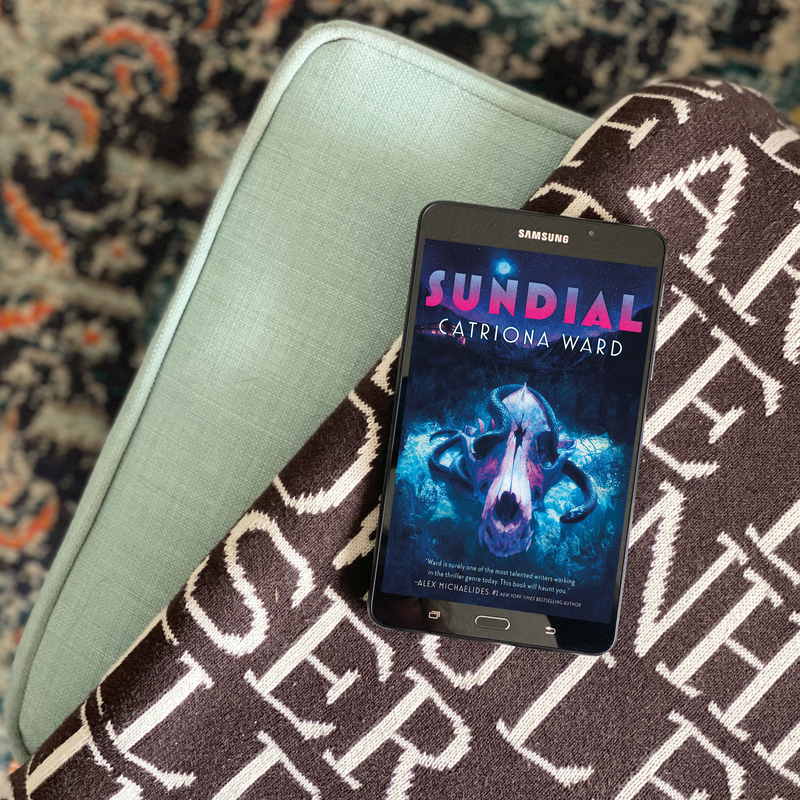 2.5 stars
An ominous, snail-paced crawl to the finish line with a lot of hidden horror and an ambiguously dark ending. This was interesting, but soooo not for me. (Take the star rating with a grain of salt.) Concepts: ★★★★ Pacing: ★ Reveal(s): ★★★ Enjoyment: ★ First off, I'd like to say that my low rating is 100% tied to my personal feelings for this novel's content and my general reading experience. I think, like most horror novels, how we respond to content warnings and plot points are very much dependent on individual reader preferences—and it's hard to know what you're getting into without spoiling yourself to a book's contents. Sundial was one of those reads for me—if I'd known where the plot was going to go when I started reading, I would have passed on it. (For that reason, I think some people who aren't excited by the book's pitch but do like certain horror tropes would love this book. But they'll have a hard time learning that without knowing details beforehand. A conundrum that often exists in this genre. ) But hey, we're here now, and I am going to do my best to sell this very well-told story that did not work for me, personally. Rob's life as a suburban mom of two daughters looks great on the surface. Her husband has money and is respected, her job is stable and conservatively appropriate, and her two daughters appear to be beautiful and normal. This is a horror novel, so I'll stop there with how things "appear" to be. Rob's hiding behind several of her secrets, and her husband, Irving, isn't much better. Come to think of it, her oldest daughter, Callie, and her youngest daughter, Annie, also have their secrets. This is a family bound in their silence and (badly) hiding behind the cracks. The façade is crumbling, and Rob's about to realize that there's nothing she can do to reverse the damage—it's time to do damage control. And for Rob, the only thing that makes sense is to return to the start of everything--Sundial. An isolated compound in the middle of the Mojave desert, Sundial is where Rob grew up. It's an odd place—almost cult-like—with more scientific experiments and death than most of us can imagine. Her family is bizarre, her upbringing strange. Rob's childhood and its secrets lay buried in the dirt along with the truth. Rob grabs her oldest daughter, Callie, and flees to Sundial to fix the problem. (What is the problem though, exactly? Is it what Rob thinks it is? Is it was Callie thinks it is? Is it even what we, the readers, think it is?) Told through split POVS, split timelines, and interspersed with story entries of a fictional world, one thing is true for this novel—the story is never solid. Sundial is a very interesting concept for a novel. It takes many pieces from other stories, and its display of the truth/reveals held a classic "twist" flavor to it that made sense when looking at the entire novel from a bird's eye view. (In practice, it led to a very frustrating reading experience.) As the reader, I was so frustrated by the stilted, distanced gaze. All of these characters felt like they were permanently behind a glass wall—sounds and pictures came through just fine, but I could never forget that there was a wall between us. I was so aware of the story being a "story" the entire time. I also think that without foreknowledge of the ending, the entire first half of the book feels like a snail crawl. I didn't know what was happening, not enough action was carrying me through the confused intro stage, and I was so aware of the metaphorical wall between character vs. reader that my connection to the characters didn't exist. There was nothing tying me to continuing this story beyond the sense of duty I had as a book reviewer to complete my read of an advance reader copy. Personal issues aside, I do think Sundial excelled in its sense of place and setting. The desert compound that the book takes its title from is grounded in gritty realities and horrors that felt as real and oppressive as a desert heat. The horrors within this book had a unique backdrop in Sundial's sense of place, and the animal elements were different than other horror novels I've personally read. The unique factor is strong here—genre readers will no doubt appreciate that. I think all fans of horror should consider picking this up, especially if my cons don't seem like cons above... this is definitely an interesting and unique entry into a genre that is brutally exacting in its demands for new content. 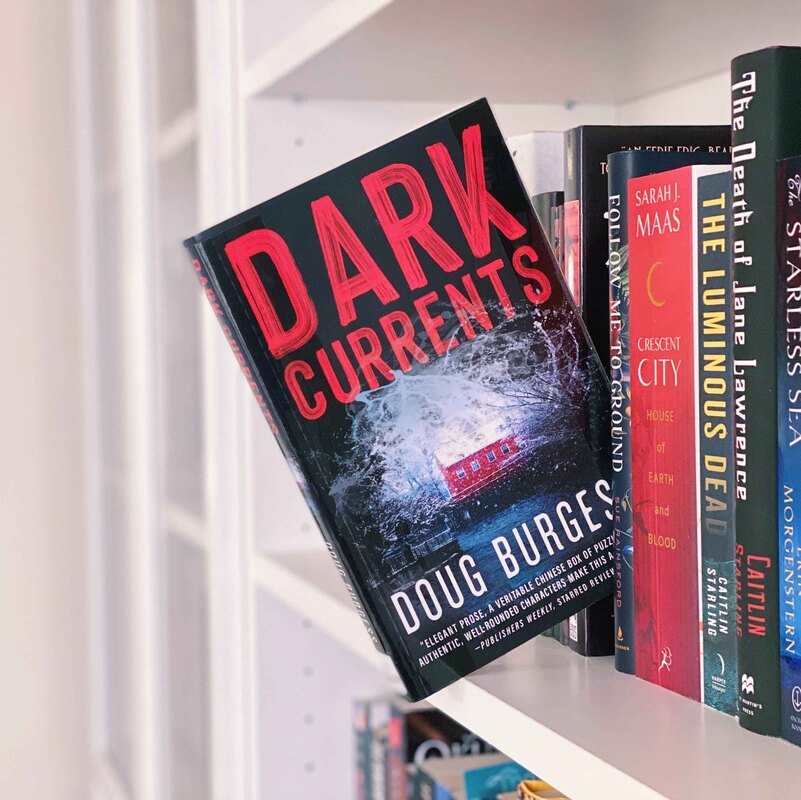 4.5 stars
A near-perfect blend of atmospheric fiction mixed with a mystery. Not a standard mystery/thriller by any means...but a spectacular main character voice. I've added this author to my immediate "to watch" list and can see myself rereading this novel many times to come. Main character/Narrative Voice: ★★★★★ Atmosphere: ★★★★★ Actual Mystery(s): ★★ Pure Enjoyment: ★★★★★ So first off, I think that this novel is weirdly placed in the mystery/thriller category on the shelves when really, it's an atmospheric literary fiction with some dead bodies in it. It's like alternative take on a Jennifer McMahon, if you gutted all of her unnecessary meanderings and subplots (some people like them, I do not) and left us with just the vibes and atmosphere—and added a main character that pops right off the page and into your living room. Don't come for the devious and hard-to-grasp mystery—this is not a Christie whodunit. This is an atmospheric stay. Dark Currents follows the story of David, a transgender man who is returning to his childhood small town of New Compton, Rhode Island, a few years after his transition and right on the heels of his recent firing from a university. Why is David returning to his hometown, you might ask? Because his grandma, who lives there alone, is in the downward swing of degenerative memory loss and he received a disturbing voicemail from her one night. There's a body, there's a lot of blood, there's a lobster, and there's a man in the dark. Can David come now!? David rushes to the scene, but by the time he arrives his grandma's forgotten the whole thing and is surprised to see him there. But the dead body is real, and its grandma's neighbor and life-long old friend. It looks like an accident, but David can't be sure and neither can the town—their witness isn't exactly reliable, after all. With small town secrets, histories, family, and more colliding into one tangle, it's up to David and his ex-boyfriend, town cop Billy Dyer, to solve the mystery and untangle the threads of the past before it's too late. My thoughts: WOW. This writing voice. Every once in a while, you come across writing that just leaps off the page and into your room with you—the voice of the narrator is so strong and so vivid without being a distraction in its own right. Dark Currents is one of those books. I could practically hear David's voice in my head as I read these pages. I loved this book for that vividness alone as hardly any fiction does that for me these days. Another thing I loved about this novel was that the story wasn't really about the mystery. It was about the people and their histories and how they converged in this particular point in time. Dark Currents has a bit of an oral history vibe to it, with vignettes of stories interspersed as David's grandma's friends tell him about the past while he tries to untangle the present. It also has a strong small town and maritime vibe, which also appealed to me. The sea and its secrets, and those who keep them. Also, last but NOT least--this novel was hilarious too. Amid the extremely dark topics of murder, transphobia/PTSD, and degenerative memory loss and its affects on family, the dry one liners and situational humor that the author managed to organically fit into this story was just *chef's kiss*. I loved it.  3.75 stars
Spooktacular, graphic, and ominous, this Japanese-inspired dark novella was a thrill from start to finish. (I just wish it had been longer.) Concept: ★★★★ Sense of unease: ★★★★★ Characters: ★★★★ Writing: ★★★★★ First off, if you love horror at all, then I think this title speaks for itself. What horror fan would pass up the chance to—at a minimum—try out this novel? Nothing But Blackened Teeth screams to be read. Literally. So I came for the title. Then, once I read the blurb, I was ALL IN for this concept. A group of young people meet up for an impromptu wedding in a Heian ruin that's known to be the origin of a traumatizing and sinister undead bride?? Say no more. Add in the fact that every single person in this toxic friend group has issues with one another and are a powder keg of drama waiting to happen?? Really, say no more, I'm already reading it. This novella comes in hot at just barely over 100 pages, and at times it felt like a fully fleshed out novel and at times it felt like it was only a few pages. I would have gladly read an entire novel on these characters and this setting, so my one main gripe about this short version of the tale is that it felt like it was only a teaser to the real thing. Don't get me wrong—it has an official beginning, exciting middle, and final end. It's the full monty. Butttttttttt. I felt like we snipped out a lot of juicy options in order to keep this uber-slim final product. Come for the concept. Stay for the beautifully rendered friend group on the brink of implosion. Leave with the unformed sense of lingering loss and unease. A great read for this year's spooky season! Thank you to TOR for an ARC of this title in exchange for an honest review. 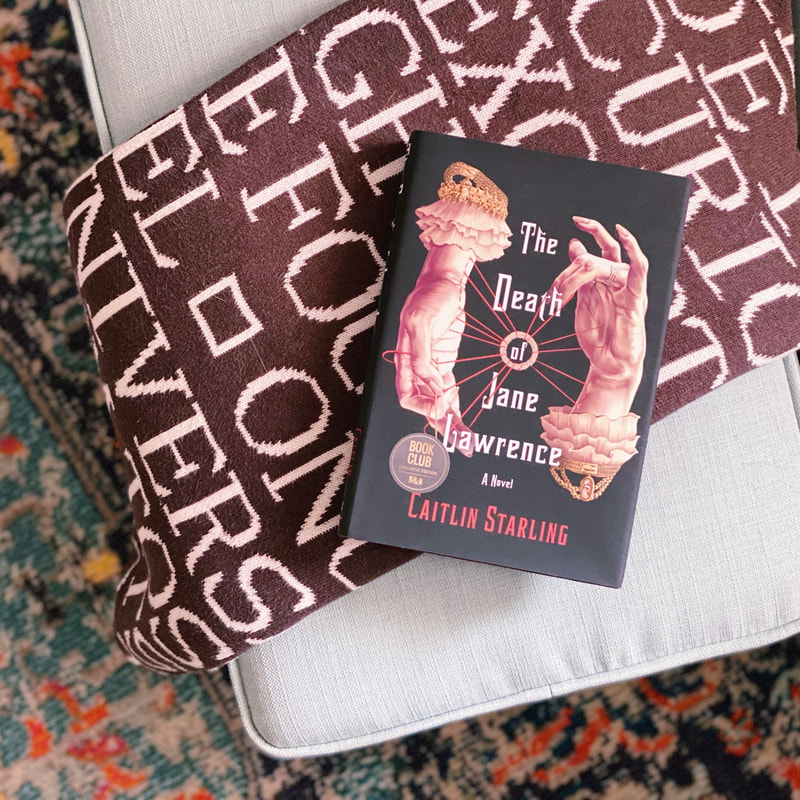 4 stars
Calling all fans of Mexican Gothic....This is not a book for the meek, it's a book for those of us who loved that story and are looking for a more intense, Gothic-a la Victorian version of it with more magic and more medical gore. Plot: ★★★★ Pacing: ★★ Horror elements: ★★★★★ Engagement: ★★★ 1/2 Jane Shorefield lives her life by the numbers. A rare female accountant in a a world that feels like Victorian England, she's done the math and decided that she needs a husband--and after careful consideration of the bachelors in her small town, she decides on Doctor Augustine Lawrence. Augustine is single, attractive, and respectable, with well-paying job as the town's only doctor. He's a great match. It is weird that Augustine is still single and seemingly not interested in marriage... but Jane decides to give it a try. She proposes a business transaction: they'll get married to save Jane from spinsterhood and to provide Augustine with a live-in woman to help him with his practice's accounts. Augustine agrees. Now Mrs. Jane Lawrence, she discovers several things in quick succession. First, Augustine's practice is filled with death and the dying--for a woman who only thought about the numbers involved, it's a rough awakening to be thrown into a hectic and gory surgery on her first day in the practice. Second, her husband refuses to let her spend the night in his family estate outside of town. His vicious vehemence takes her aback. Jane agrees, but like all good stories we know that doesn't last. Third, there's something Augustine isn't telling her. Jane can't expect anything more, as she knows they did this for convenience and not for love, but there's something under the surface that Jane can feel at the edges of their relationship. What is it? When a simple miscommunication leads to Jane arriving at the estate, everything begins to change. Jane quickly realizes that her world is not what it seems.... and at the heart of the wrongness is Augustine. Gross, gory, and enrapturing, The Death of Jane Lawrence was a doozy of a novel. The sense of menace in the writing was top tier. From the beginning, you can feel the trap closing around Jane despite her point of view trying to make logical sense of her surroundings. I was waiting with baited breath for the shoe(s) to drop. (Boy, do they ever.) Once Jane gets to the estate and things start to happen, the pacing and plot develops into its final form of intricately paced and plotted horror. I both loved the pacing and absolutely hated it. It was too slow for me, but I couldn't stop? That duality carries throughout the entirety of this novel. You're attracted and yet repelled, boring and yet enraptured, disgusted and yet understanding. Intense. I liked it a lot for what it was, but count this one in the category of "I can't believe I liked this, it was so dark and twisted" fiction such as Mexican Gothic, Follow Me to Ground, and others. Spoilers for the graphic elements: (view spoiler) Thank you to the publisher for my copy in exchange for an honest review. 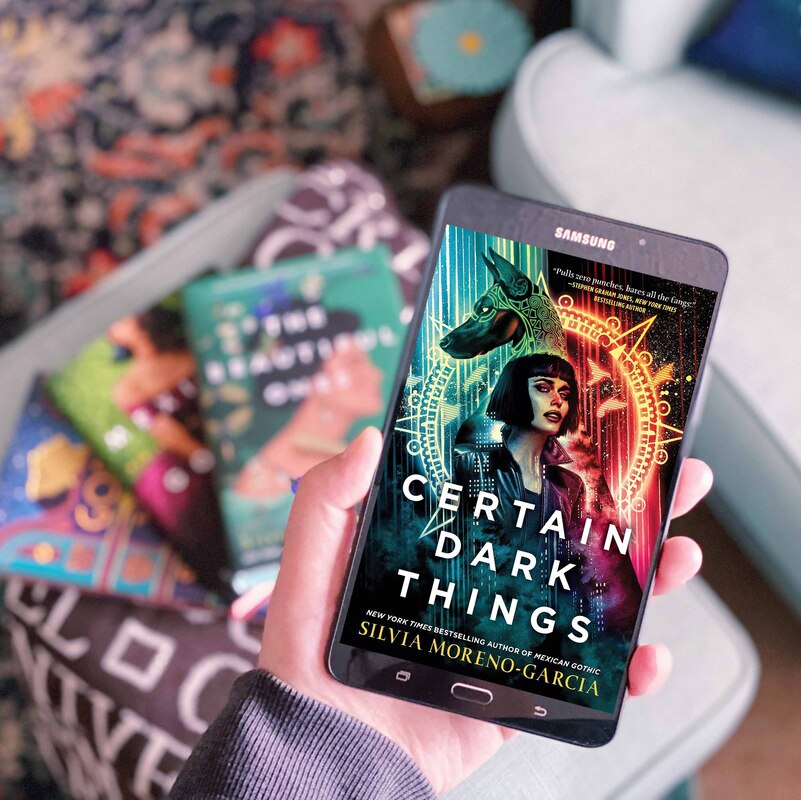 4 stars
A vampire novel that plays with your expectations and brings new light into the niche? Nice. Characters: ★★★★ Pacing: ★★★ World: ★★★★★ Enjoyment: ★★★★ In an alternate version of Mexico City, vampires exist. Well, they're outlawed from Mexico City itself, but they're a known species in Mexico and throughout the world. With several different subspecies of vampire originating from all across the globe, things come to a head in Certain Dark Things when the Mexican native group of vampires, the original Aztec blood drinkers, encounter a turf war with the European immigrant variant of vampire and the fallout impacts different people in Mexico City. Atl, the lone surviving member of her vampire clan, is on the run from the European vampire clan that massacred her family. She picked Mexico City as a dangerous hideout spot in order to avoid the vampires in a city that outlaws their existence. While it makes it hard for the bad guys to track her down, it also makes it hard for her to get around—and she's not exactly hiding well with her huge genetically enhanced Doberman at her heels. Atl desperately needs to escape Mexico if she wants to survive. Domingo is a trash collector in Mexico City. He's eeking a meager life for himself on the fringes of society, and he's still young enough to believe in adventure. So when a mysterious and beautiful woman with a hulking Doberman dog asks for his help, he agrees with a shocking lack of hesitation. Atl thinks he's just a convenient meal for now. Domingo thinks he's having his shot at a grand vampire adventure. They're both in for a huge surprise. I loved this neo-noir take on vampires in Mexico City. Like all of Silvia Moreno-Garcia's works, I thought this one was fantastic. I love her writing and her way of engaging storytelling. Her characters feel real and yet distant, easy to predict and yet surprising. Certain Dark Things was no exception, even though it did have a few more bumps in the plot and pacing than a usual Moreno-Garcia work (Gods of Jade and Shadow and Mexican Gothic were written later than this one, and you can tell. However, it's a testament to her writing ability that the difference in quality is not that large.) Highlights for me: The characters, the worldbuilding, and unpredictable nature of the story. Lowpoints for me: I did think the pacing suffered in the middle, but that's because I love drama. Overall, I really enjoyed this one and am thrilled to see it republished in this form with this stunning cover edition. Its brief original release and subsequent abandonment due to publisher issues was not the fault of the work, and now we can all enjoy this tale in its updated form! Thank you to Macmillan/TOR for my copy in exchange for an honest review. 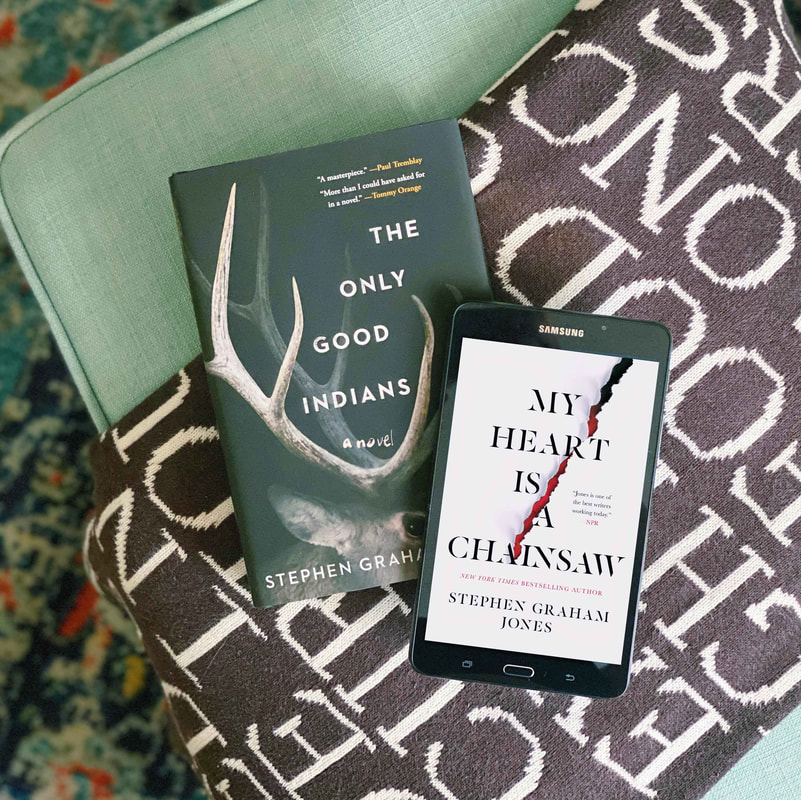 4.5 bloody stars
The true horror of this novel has nothing to do with the gore or the slashers. This was deceptively stunning. Concept: ★★★★★ Pacing: ★★ 1/2 Plot layers: ★★★★★ Overall impact: ★★★★★ Oof. How do I review this one. On the one hand, I want to start with the hard spoilers and work my way backward because I haven't see many reviews addressing the elements that I want to talk about. But on the other hand, half of this novel's brilliance comes from the reveals and final steps. I guess we'll see how this goes. My Heart is a Chainsaw was stunning. I had to read it roughly 1.5 times to get to this 5 star rating—let me explain. For the first third, I was NOT feeling the story. As someone who hated Catcher in the Rye for Holden's annoying internal monologues and meandering prose, the main character of Chainsaw, Jade, fit that bill too closely for my tastes. I wanted to reach into the pages and "make her stay on track, dang it!" Lots of pop culture slasher references, meandering thoughts, unlikeable character traits, the whole nine yards and then some. But then some reveals hit us around 1/3-1/2 mark, and I was floored. Absolutely floored. So now, at the halfway point of the novel for the first read, I went back to the beginning. I needed to see what I'd missed and see how the author had gotten us here—because clearly Jade had done what she'd intended to do... which was hide the truth from us and herself. So let's just say that if you're not feeling Jade or the pacing of the novel on your first read, you're not alone. But it is disturbingly worth it. This is a novel filled with guts and gore and slashers and horror. Not a single review disputes that. But it's also about Jade. It's about what she's not saying and not addressing—and yet putting in these pages like Morse code. It's about the true horror behind the curtain and the mind's way of (not) coping with reality. It's about our fantasies, our dreams deferred turned dark and deep, our use of pop culture to explain our present and idealize our future. To touch on the surface plot for a bit, I found the slasher elements of this novel to be interesting. As someone who loves new horror trends and never quite got into the old-school slashers that Jade loves to reference, I didn't find it hard to follow. Maybe a bit heavy-handed, but isn't that the mode of the slasher in the first place? I'm giving this five stars for Stephen Graham Jones' stunning interplay between surface plot and subplot, and his way of taking the familiar "outside" horror that we see in the movies and using it as a mask for the darker, intimate horrors that cut deeper. A strong novel with a bleak outlook on truth and life and personhood, this is one that will linger with me for a long time. Thank you to Gallery Books for my copy in exchange for an honest review. 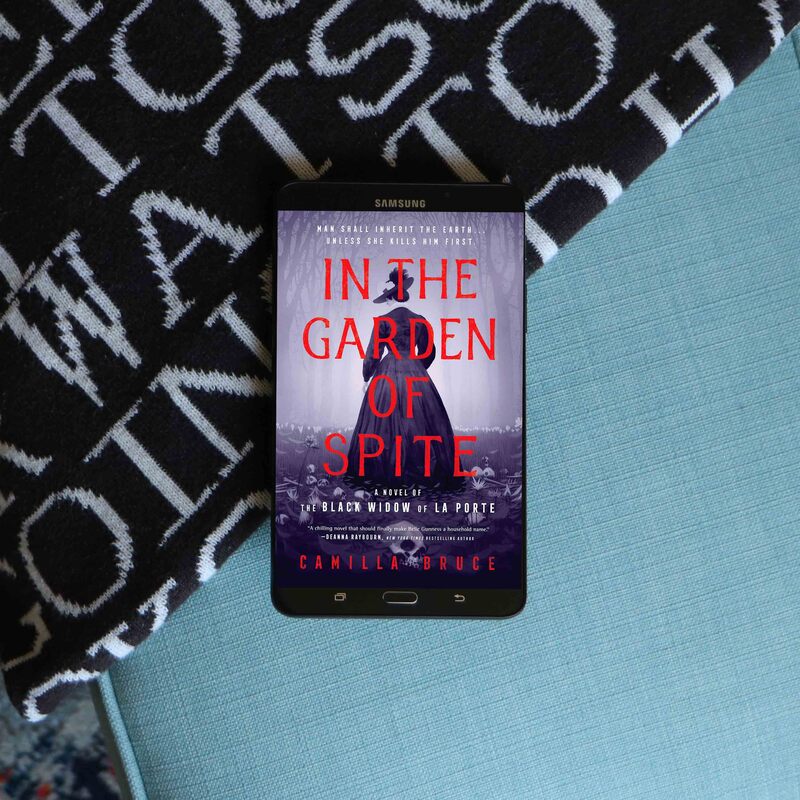 4 stars
Camilla Bruce is now on my list of must-read authors. Her interest in the darker elements of the female experience—and in this case, the sociopathic murderous elements—makes for fascinating reading. This was a great work. But it could have been shorter. Concept: ★★★★★ Character portrayals: ★★★★★ Pacing/Length: ★★★ Have you heard the story of the Widow of La Porte? Belle Gunness' reign as one of the most prolific female series killers in early 1900s America is a chilling (and true) tale. Belle Gunness was born Brynhild Storset in Norway in the 1800s to a poor family of rural tenants. Her earliest years are spent with vicious nurture and violent nature, and an early sexual encounter gone extremely sour—the author's editorializing at work with this fact, as this encounter is rumored in Norway but not officially confirmed--leads to her first murder. Little Brynhild poisons her abuser and likes the feeling of power she gets. Little Byrnhild doesn't do well in Norway. The villagers whisper about her and her pride chafes at the knowledge that everyone in her small town knows of her shame. She writes to her older sister, Nellie, in America and desperately asks for her to help her. Nellie agrees to fund Brynhild's voyage to America and takes her under her wing in a Norwegian-American apartment community in Chicago. Brynhild becomes Bella. Bella's pride, greed, and need for control over the men in her life lead to some dark decisions... and her sister Nellie begins to suspect that something is not all right with her sister. As the years go by, Bella's life seems to be marked by obvious tragedy. Her husbands and children just keep...dying. And her homes and businesses just keep... burning down. What's up with that? Eventually, Bella moves to rural Indiana and marries Peter Gunness, her new persona as Belle Gunness begins. And once Peter suffers a tragic accident with a meat grinder—or cleaver, depending on who you ask—what's a twice-made widow to do with a huge farm but create an ad asking for male farm hands to come and help her? It's not exactly her fault if all the men disappear in the night... The black widow spider creates her wicked web... Told in two points of view, one from Belle herself and one from her sister, Nellie, In the Garden of Spite takes us along for the ride as we silently witness Belle's entire life from girlhood to her bloody reign as Belle Gunness on her murder farm. It's a chilling tale meant to unsettle, and Camilla Bruce's mastery of ominous, distanced writing really sells the tension throughout this almost 500-page novel. But bringing up the length of this book brings up my only caveat—it was pretty long. In the marketing, the focus is entirely on Belle's time in La Porte as a murdering farm widow. This seems to be a bit misleading and definitely affected how I viewed the pacing of the book. When you start a book expecting to read a novelization of the Widow of La Porte....and then it takes 380 pages to get to Belle's life as "Belle Gunness" in the first place... Honestly, it made the first 3/4 of the novel feel incredibly slow. I kept waiting for the "real" plot to happen and that took away from the experience of reading the characters' life stories. I'd definitely recommend going into this knowing that you're getting a life's story and not a snapshot novelization or a glorified true crime fixation. This is a personal and chilling character study of one woman's descent into the darkest levels of the human psyche and her lack of acceptance of her own darkness. It's also about the toll that life on her loved ones, and the knife's edge between loving and protecting your family versus realizing the monster in your family tree. Definitely read the author's note at the end - it gives a lot of context for Belle's real life, the amount of research the author used, and a key list of artistic differences that the author decided to take on in order to explore the themes. Thank you to Berkley, Goodreads, and NetGalley for my giveaway ARC of this title in exchange for an honest review. 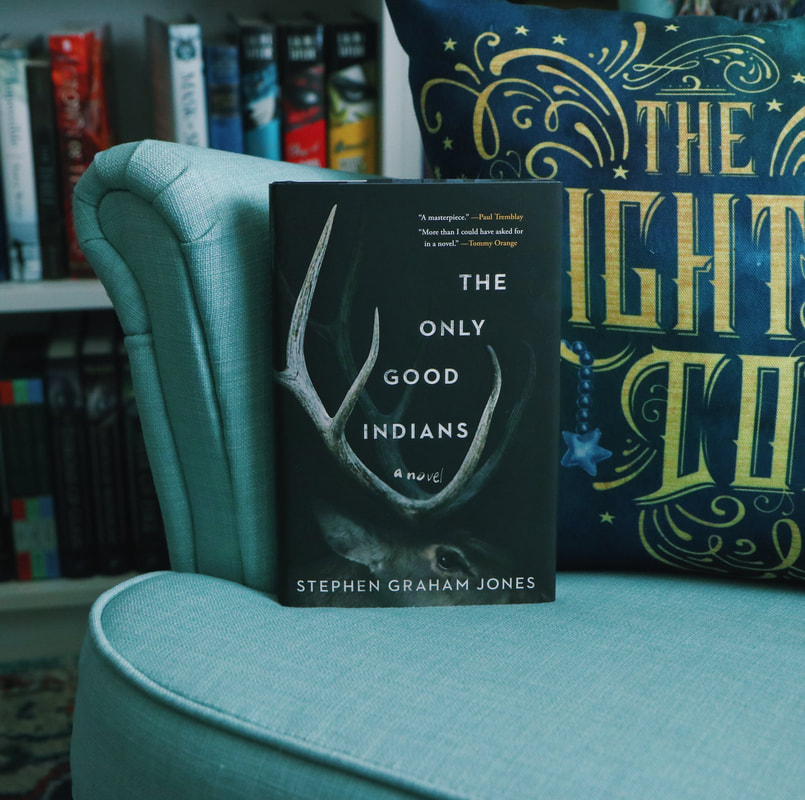 5 stars
Four men discover that things they buried in the past don't stay buried in this multi-layered cultural horror novel by master writer Stephen Graham Jones. Tension: ★★★★★ Potential to linger in your mind forever: ★★★★★ Execution of plot: ★★★★★ This was stellar. That seems to be an odd opinion as I don't see too many 5 stars rolling around, but this horrific tale of past sins, cultural obligations turning into traps, cyclical identity horror, and more was amazing. The Only Good Indians is a different kind of horror novel. Oh, it goes there with its horror—extreme trigger warnings for horror inflicted on animals being a main example. But it's also a layered look at what it means to be Indian/Native American/Indigenous in today's America—and the cultural identity, cyclical injustices, and lingering wounds of the past that refuse to heal both within the community and in the country at large. Ten years ago, four friends decide to break the laws of the land and hunt for elk in the elders' only zone. While there, they find a herd of elk and take them down in a glorified slaughter. One of their kills is a young female. And she was pregnant. (Killing young/pregnant targets is taboo for hunters.) Now ten years later, those four men all live different versions of a modern Native experience. Two are still on the reservation, struggling with their own pasts and present within the constant social chains of familial obligation and tribal identity. One man fled the reservation after the OD of his brother and escaped to North Dakota to work on a oil rig. One man fell in love with a white woman and pretends he's made his own choices to be away from the reservation as opposed to hiding from the sins of his past. But the past draws long shadows, and the Elk Head Woman is coming to avenge the slaughter of the land. Who will be the first man to fall? Presented in sections dedicated to the different men and their encounters with the horror stalking them, this novel kept me on the edge of my seat from the first page to the last. Jones' talent for ominous atmosphere delivered through distanced writing was fantastic. It speaks to the talent of the writing that something with relatively little jump scares and/or action was able to keep my muscles so tense for so long, ready for the next jump. This book was terrifying, its progression toward its only conclusion ceaseless and inevitable. I don't think this kind of horror novel will be for everyone, and as my friends' ratings suggest, that is clearly the case. If you come to this novel with an expectation, expect it to be ignored. The Only Good Indians stands alone in its pacing, its plot, and its ability to have each action and reaction exist not only as concrete points of the surface horror novel but also reflections of horror in myriad forms of the Indian/Native American/Indigenous experience. Thank you to the publisher and Libro.fm for my audiobook copy in exchange for an honest review. |
Amy Imogene ReadsJust someone looking for her own door into Wonderland. Categories
All

Archives
April 2024
|
 RSS Feed

|
Home
About Contact |
All reviews posted are my own and do not reflect the opinions of any other individual or entity. When applicable, reviewed titles sent to me by the publisher are noted at the bottom of each review.
|